

When & How to Use Curriculum Well
For youth workers, the curriculum debate never seems to stop: should I buy one or build my own?
Plenty of conference breakouts, publishers, podcasts, and articles have been dedicated to curriculums and their supposed benefits. At the same time, there are plenty of horror stories about curriculums that sacrifice theological depth, contain errors, and simply don’t connect with students. This wrestling eventually leads us back to the original question: should we write our own content, or buy a pre-built curriculum?

Every ministry uses a curriculum. The question is whether you build it all from scratch yourself or buy and adapt it from a trusted source. That decision will affect your budget, volunteers, discipleship strategy, and ministry time.
Whether you choose to build or purchase one, here are some principles to keep in mind.
Faithfulness Matters More Than the Source
Faithfulness to the biblical text is the standard for any curriculum, regardless of origin. When you write your own material, the goal isn't originality or cleverness. It's careful exegesis, where we unearth the text's intended meaning and let Scripture speak. Since you know your students, you can connect the text more directly to their current situations. If you have the training and time to do this exegetical work, then it will also implant the message in your own heart while you prepare to teach it.
That same standard applies to every pre-built curriculum you consider. If a purchased study helps a youth worker teach the passage with biblical depth that connects faithfully to their students, then it's a good choice. Many leaders love students deeply, but haven't spent years studying Greek syntax or learning to construct an expositional lesson. A theologically sound curriculum gives them a reliable framework to open the Bible, explain the Gospel clearly, and guide teenagers toward Christ without drowning in weekly prep. It can also provide them with a jump-start on faithful teaching with less prep time.
At my previous church, I wrote all our curriculum for years. As I prepared to leave, I sat down with my leadership team to map out a scope and sequence moving forward, and it became obvious that our leaders didn't just need content, but confidence. They needed material that would provide the guardrails to allow them to step into the room focused on teaching students, without having to worry about building it from the ground up.
Budgeting Time for Ministry Matters
Time is just as finite as the budget, and it's the first casualty when a ministry schedule gets heavy. Writing curriculum carries a hidden cost: the hours you aren't spending on pastoral care, relational discipleship, and logistics. When you start from scratch, you have to dedicate a substantial amount of time to craft a solid lesson each week. Every ministry has high-demand seasons. Juggling retreats, camps, parent communication, and volunteer coordination while writing a fresh teaching series can push vital ministry to the margins and lead to personal burnout.
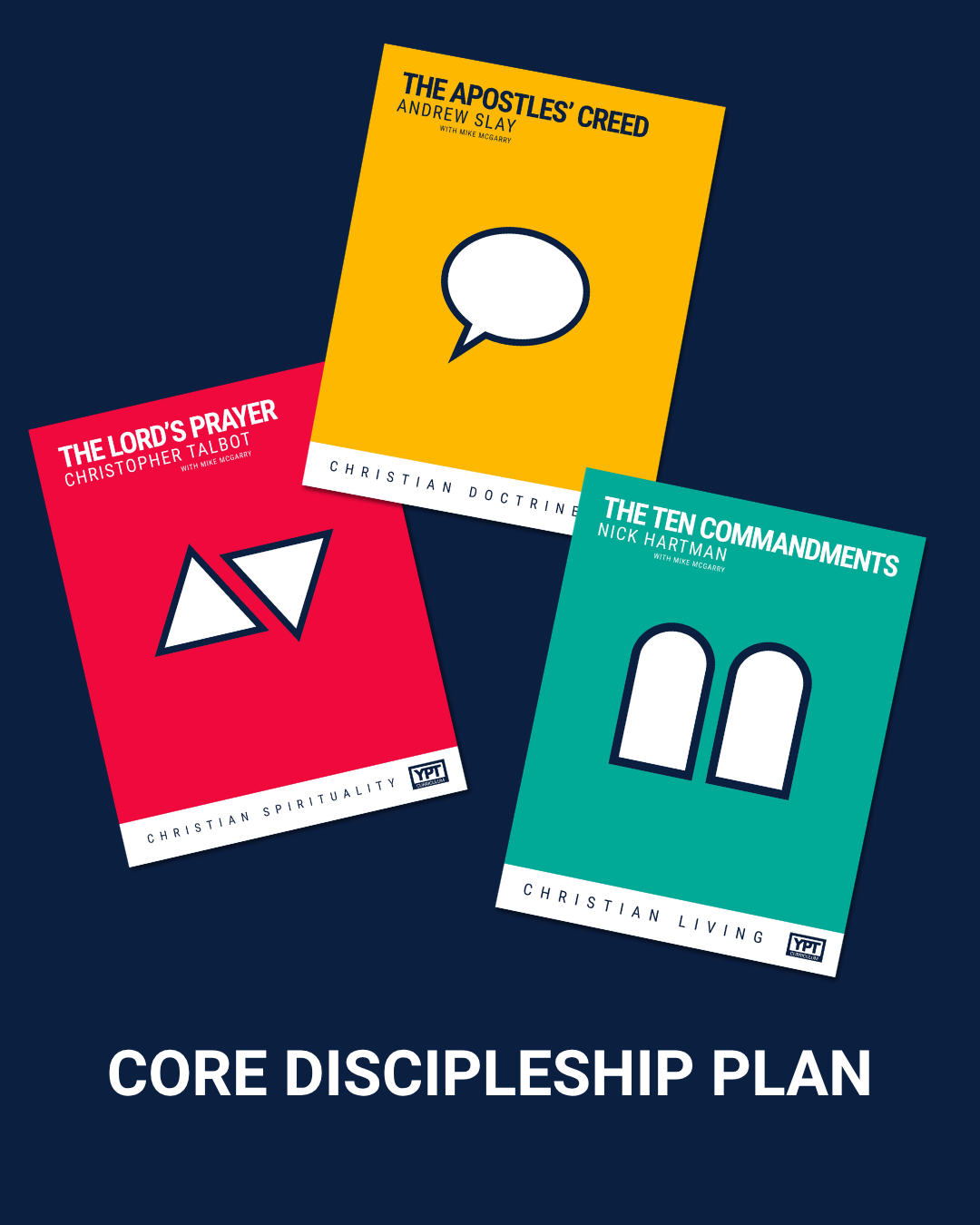
The YPT Curriculum is literally built so you cannot ‘plug and play.’ We want you and your volunteers to need to prepare… but we’re giving you everything you need to teach it well. So, it’s teacher-friendly and easy to use, but is designed to be modified because we believe that you are called to disciple your students, not us.
One misconception about pre-built curriculum is that it means you don’t have to prepare; you just “plug and preach.” Starting with a prepared foundation doesn't (and shouldn’t!) eliminate preparation. You still need to read through the text, internalize it, and adapt the material to your context. Remember, you are called and held accountable to shepherd the students entrusted to you, the curriculum writer isn’t. But using a trustworthy curriculum can lighten the heavy lifting of structural design, exegesis, and layout.
Understanding Your Context Matters
Writing curriculum means you control the details, so you can include what your students understand while avoiding generic examples. Because you know the dynamics in your context, you may be able to tailor the content in such a way that your students see how it directly relates to their own situations. This can be an asset, since one of the risks in pre-built curriculums is the generic examples for their wider audience don’t relate as well.
With solid, pre-built curriculums, your time is primarily spent bridging the gap between the curriculum and your context. If an illustration falls flat, replace it. If a story needs local flavor, add it. When I use purchased curriculum, I follow a simple 10% rule. Adapt roughly 10% of each lesson for contextual fit. Swap an icebreaker. Tighten discussion questions to match the students' vocabulary. Insert a personal story that reinforces the main point. These small edits ensure that I’m not just reading a script. It brings my pastoral voice into the room and signals that I sincerely believe this lesson matters for these kids I know and love.
But there comes a point where the “editing” process becomes a distraction. If you're rewriting 30 or 40% of a lesson because you think the theology is weak or the flow is off, you've crossed the threshold. You are on your way back into “writing your own” territory.
Building the “Flesh” Matters
A good pre-built curriculum gives your ministry a skeleton: sound theology, logical flow, and a pathway through the text. That's the backbone. It's what keeps your posture straight week after week, especially when you're depleted and your volunteers need a reliable guardrail. But a skeleton isn't a living body. The flesh that brings it to life comes from you. Your anecdotes. Your knowledge of which kid is struggling at home. Your time of prayer as you study the text. The way you apply the gospel to their specific fears and failures. Personal examples of how God has used passages like that to change your life. That's something beautiful that no packaged curriculum can manufacture.
So if you are in a season when you don’t have time to build a complete curriculum yourself, buy the skeleton. Or if you’re leading a ministry that’s heavily volunteer-led, then give them a trustworthy curriculum to guide them. Invest in material that's been vetted, is theologically sound, and designed in a way that’s compatible with your ministry philosophy so your teachers stay on track. Then build the flesh. Make it local. Make it personal. Shepherd your students through content that respects their context and points them to Christ with clarity. That's the faithful middle ground.
Remember, curriculums are meant to be tools, and none of them are perfect. When you buy a curriculum, you are trusting that the writers have faithfully carried the weight of the structure so you can carry the weight of the shepherding. That’s not a small measure of trust to give a curriculum. But if you find the right curriculum to serve your students and leaders, that can be a real blessing to your whole ministry.