

How I’m Teaching the Psalms
Note: “What I’m Teaching at Youth Group” is an ongoing series that presents a snapshot of a recent series the author has taught in their own ministry. Our goal is to present a helpful model for what it looks like to practice biblical and theological depth in youth discipleship.
This summer I accepted a new student pastor position. While stepping into a new ministry context is already challenging for several reasons, I found myself struggling to pick an introductory series because I didn’t have the benefit of knowing my context very well. The students were new to me, plus I didn’t know what they had previously been studying (or how deep their biblical literacy was). Considering these challenges, my rationale was this: teach them a book of the Bible written for God’ s people in every season. So I decided to lead our student ministry through a series in the Psalms that we’re calling “Walking with God through Every Season.”
I chose this series title because the Psalms, as a collection of Hebrew songs and prayers, enable us to do just that: to walk faithfully with God through all seasons of life! In these ancient songs we find poetic language that helps us no matter where we are in our walk with Christ. We can learn to rejoice and lament, wrestle and rest, repent and forgive! The Psalms cover the entire range of human emotion, and they can model how to express our feelings, while learning to trust God even when navigating difficult circumstances.
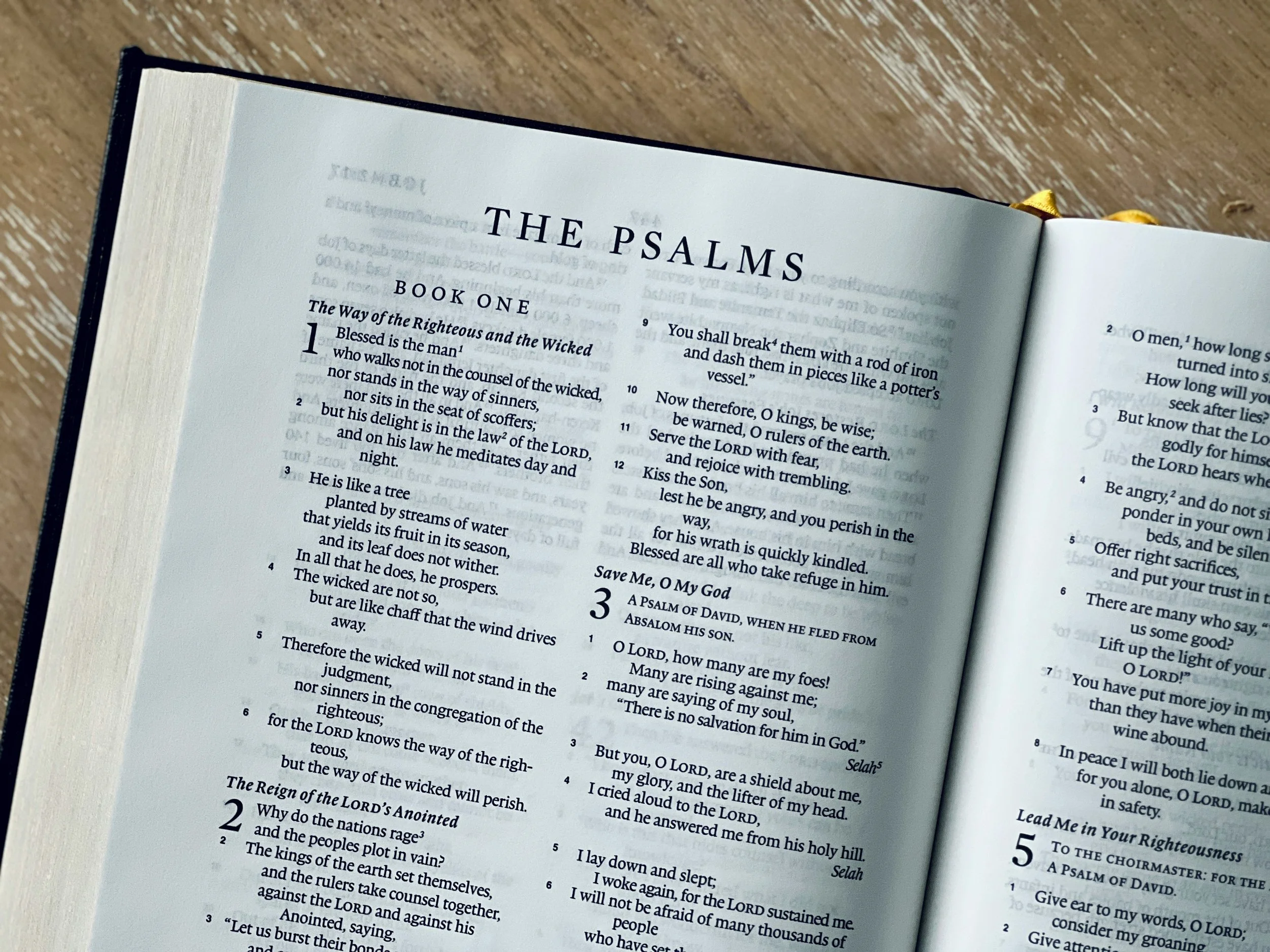
Why Teaching the Psalms is Important
We all have students in our ministries who are looking for ways to express the anxieties of their hearts: the 10th grade girl whose parents are getting divorced, the 7th grade boy who is bullied at school or at home, the 12th grader who is overwhelmed about life after high school, or the student who is just grateful for what God has been doing in their life and can’t find the right way to say it. The Psalms give us words, inspired by God, to reflect on and hold fast to no matter what we are experiencing. They help us praise in times of rejoicing and comfort us in times of grief. They help us move forward in hope and encourage us when we despair. They guide us when we are confused and ground us when things are falling apart. They are truly words with the power to change our lives!
But the Psalms do this in a way that is directed, becoming guardrails that shape how we approach God. They give us substantive and essential doctrines, admonishments to live wisely, and give us models of how to pray to God, praise God, and deal with hardship and suffering. In short, I believe you should seriously consider teaching the Psalms because they are experientially and theologically rich. They provide our students with a God-given vocabulary for interpreting and responding to the failures, challenges, and joys of life.
Considerations for Selecting Psalms to Teach
I am a strong proponent of expository preaching in student ministry, which often lends itself to teaching sequentially through a book of the Bible. That is one approach I wouldn’t recommend when it comes to the Psalms! But organizing the series thematically doesn't mean abandoning exposition, especially since the Psalms are grouped into particular “books” within the book, allowing for purposeful selection without neglecting their intended use. Each week, I still aim to carefully explain and apply the Psalm; the difference is simply that I'm choosing the texts according to a narrower focus, rather than preaching Psalm 1 to Psalm 150. To be a good steward of the very limited time we have with our students, I think these factors should be considered as we develop our teaching scope and sequence.
Here are some of my recommendations for choosing which Psalms to teach:
A. Choose Significant Psalms
When it comes to guiding our students through the psalter, I believe we have a duty to select those psalms that have proven to be significant in the life of the church. How cool is it to teach the Psalms that have formed the worship, theology, prayers, and imagination of God’s people for generations?! Examples include: Psalms 1, 8, 19, 22, 23, 46, 103. Additionally, it might be helpful to preach Psalms that your students, immediately associate with the psalter (and no, you don’t need to always do so with “a twist”). Don’t underestimate the impact hearing a familiar message on a favorite passage can have!
B. Choose Your Favorite Psalms
We all have those certain Psalms that are special to us. Maybe during a hard season of life, a psalm encouraged you in a powerful way. Maybe, like myself, there were certain psalms that you read as a student that struck a chord (like Psalms 32, 34, 51, 100). Do your students a favor and include some of those psalms that you are passionate about! Tell them how that psalm impacted you, whether it comforted you in a dark time or helped you see God in a new light. It is never a bad idea to encourage students with how God’s Word has worked in your life! They’ll appreciate your authenticity.
C. Choose a Variety of Psalms
One final word of advice when it comes to selecting which psalms to teach is to choose a variety of psalms. One of our goals, in addition to covering some of their favorite “classics,” should be to expose students to a variety of topics, themes, genres, and tones.
As poetry, the Psalms themselves cover a great variety of subjects, and they consist of many different poetic forms and types. There are Psalms of lament, praise, thanksgiving, celebration, wisdom, imprecation, and each one matters for a different reason. The Psalms are artistic theological expressions, and we should embrace their variety to our advantage!
How I Structured My Series on the Psalms
I chose to organize my sermon series into 5 thematic “mini-series”. I have found this to be a helpful approach because it allows me to cover a lot of ground, while at the same time protecting me from the oversight of choosing psalms that are too repetitive.
1) Walking with God (Introduction to the Psalms)
Psalms 1, 2, 8, 19, 23, 27.
Learning who God is and what it means to walk with him.
2) Walking with God Through Suffering (Lament & Trust)
Psalms 22, 30, 42-43, 46, 88.
Learning to bring our suffering to God while trusting his character.
3) Walking with God Through Failure (Repentance & Grace)
Psalms 32, 51, 103, 106.
Learning to respond to our sin while resting in God's abundant mercy.
4) Walking with God Through Worship (God's Greatness)
Psalms 34, 95, 97, 145.
Learning to respond to God's greatness with wholehearted worship.
5) Walking with God Through Hope (Future Confidence)
Psalms 73, 121, 139.
Learning to place our confident hope in God's promises.
4. Final Thoughts
Many students are used to hearing teaching that falls flat because it doesn’t connect with what they’re going through. They are struggling, worried, and they often don’t think that God’s Word is the cure they need. But the beauty of the Psalms is that not only does it afford us the flexibility to touch on heavy issues, but they give us guidelines to how we should respond in our own hearts! What an opportunity for our students to not only hear the truth, but to feel it. As they hear David’s cries for salvation, the mourning of Israel in their ascent, the awesomeness of God that only Moses could understand, and the cries of the Suffering Servant who died to make them new, may God’s Word plant its roots deeply in them. After all, that’s what we hope for.