

Friday Review (6/19/26)
Each week we compile a list of helpful articles from other sites, in a variety of categories, for youth workers to read, reflect on, and/or discuss with parents and volunteers. If you have any articles you’d like to suggest, we’d love for you to share those in the Youth Pastor Theologian Facebook group. That’s a great way to bring them to our attention and to discuss them with like-minded youth workers! (Inclusion in this list does not imply complete agreement with the publishing source, but we have found these articles to be beneficial.)

Youth Ministry
Don’t Just Settle for Youth Ministry. Embrace It, by Karston Harrison (The Gospel Coalition)
Local churches need youth pastors committed to more than two-year ventures. They need leaders who have a long-haul discipleship vision, who don’t merely settle for youth ministry but embrace and commit to it. Why should youth ministry leaders pursue longevity in their ministry roles? Here are several reasons.
The Hidden Damage of Favoritism in Youth Ministry (And How to Stop It), by Doug Franklin (LeaderTreks)
We get to speak truth into students’ lives. We get to encourage them, walk with them, and help them experience the love of Christ in personal ways. But with that privilege comes a sobering responsibility—because the same relationships that can bring healing can also cause deep hurt.
Sharing in Service, Sharing in Life: Integrating Youth into Our Church Families, by Anne Chen (Rooted)
We can often forget that youth are just as much a part of the life of the church as adults. It’s not just that we need them, or that they need us, although both are robustly true. Scripture itself explicitly calls for older women and men to teach and train the younger generation (Titus 2); we can hardly teach and train effectively if we’ve separated youth and adults into their own silos at church.
Biblical & Theological Studies
A Case Against Christian Doomerism, by Griffin Gooch (Mere Orthodoxy)
Yet, defining everything as inherently bad, or accepting worries of drifting into a godless, TikTok fueled oblivion as if this concern is an established fact will necessarily sacrifice requisite Christian hope. Rather than comprehending Christ’s overcoming of the world, we come to imbibe the poor state we’ve projected onto the world.
10 Tips for Becoming an Excellent Bible Interpreter, by Derek Brown (With All Wisdom)
Becoming a skilled interpreter of Scripture is not a complicated task. It is hard, but it isn’t complicated. God does not hide the riches of his Word from the simple; he hides them from the proud and ungodly. Right interpretation, then, is first a matter of personal character and piety, and then a matter of methodology.
Cultural Reflection & Contextualization
AI Is Not Conscious, But It Is Becoming Our Unconscious, by L. M. Sacasas (The Convivial Society)
Automating basic physical motions is the indispensable foundation of virtuosity. But does this dynamic apply equally to all realms of human activity? Are there cases in which outsourcing certain forms of activity undermines rather than enables the achievement of the higher goods for the sake of which the activity is pursued?
The Tradwife Trend Is Asking the Right Question… And Getting the Wrong Answer, by Andy Shurson (Center for Faith & Culture)
The pictures of a good life emerging from the Tradwife movement draw us in for many good reasons, but nostalgia needs good theology. Otherwise, the image of the good life can become an idol because we long for a picture of the good, true, and beautiful and not its source.
Pastoral Ministry
Why NOT To Build A Bigger Sanctuary, by Mark Hallock (Preach. Lead. Love.)
The size and use of your sanctuary will greatly affect the culture of your church moving forward. Let me humbly offer a little different perspective on this topic, especially for those of you in churches that are outgrowing your space.
Sustaining Strength for the Complexity of Pastoral Ministry, by Daniel Bouchouc (For the Church)
Paul’s heavy list of imperatives presents a high calling for pastors. How should a pastor “fan into flame the gift” (2 Tim 1:6) so that he can do what it takes to fulfill this ministry and to conclude at the end that—“I have fought the good fight, I have finished the race, I have kept the faith” (2 Tim. 4:7)?
4 Convictions You Should Never Preach Without, by Mike Bullmore (Crossway)
If these convictions about Scripture are not in place and operating in your hearts, I do not think you should be allowed to preach. But if these convictions are in place and operating, they are more than convictions. They are profoundly motivating reasons to preach expositionally and to persevere in doing so.
Family & Parents
Why AI Makes For A Poor Therapist And Companion For Teenagers, by Kristen Hatton (Rooted)
Unfortunately, I’ve even heard parents encourage their teens to use AI for emotional support. In some ways, this makes sense. Counseling is expensive. Scheduling can be difficult. And opening up about painful or shameful struggles can feel intimidating. AI offers instant answers, anonymity, and accessibility with a single click.
From YPT this week
How to Build a Message, by Kristopher Foster
Now that you have done your biblical exegesis, collected illustrations and quotations, and know what you want to say… how do you begin to actually build the message you’ll deliver to students?
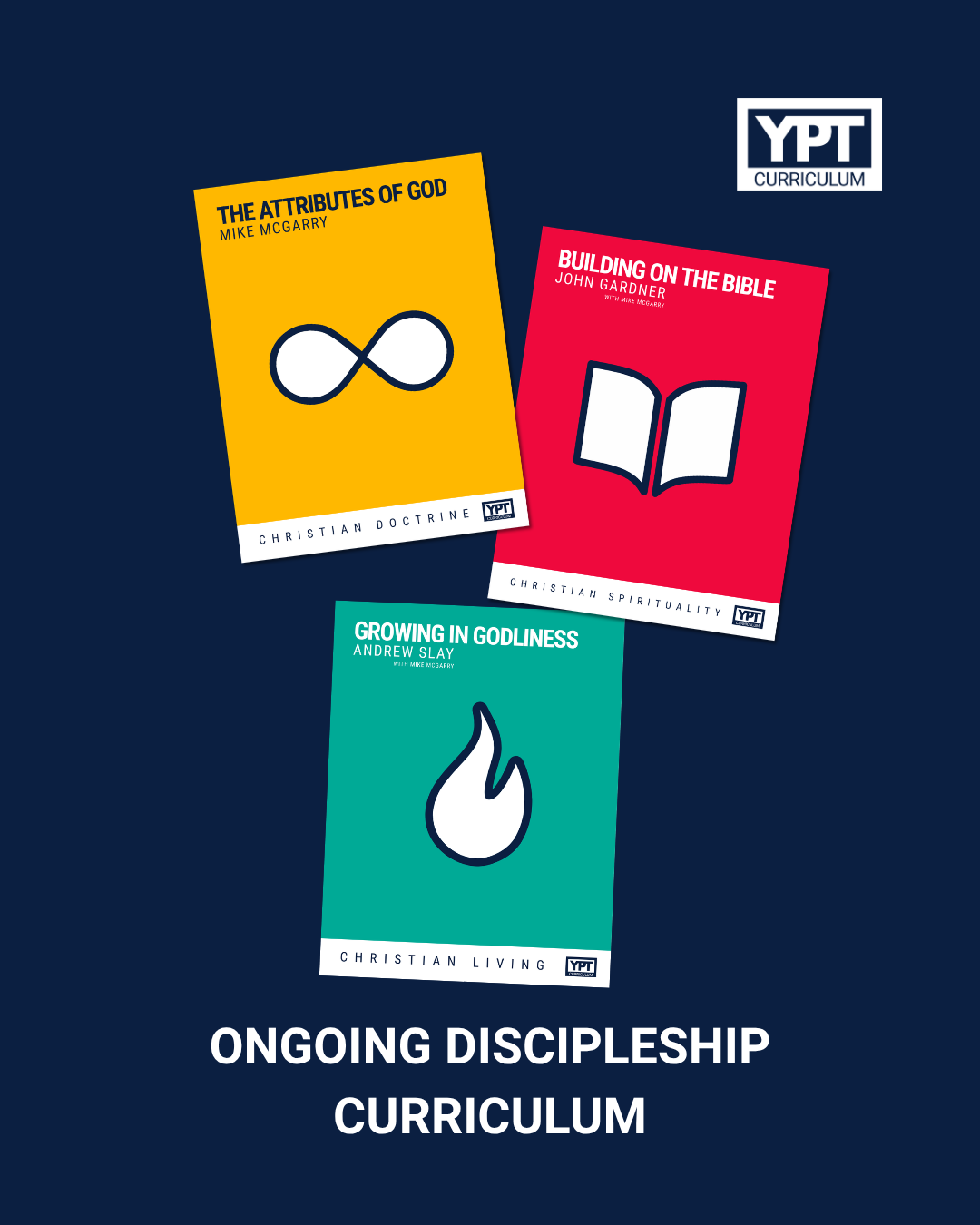
YPT’s Ongoing Discipleship Curriculum delivers 36 weeks of curriculum for your youth ministry. That’s enough for a full school-year, assuming you take a few weeks off here-and-there.
Featuring three 12-week studies, each includes a downloadable Leader’s Guide and Student Guide:
The Attributes of God (Christian Doctrine): Do your students know how to describe God, biblically? This series focuses on a key attribute each week, in order to help your students grow in their understanding of who God is and what he is like.
Building on the Bible (Christian Spirituality): Do you tell youth to read the Bible, or do you teach them how to do it? Walk through the different types of writing you’ll find in Scripture and identify the key “ingredients” that will help you understand what it means.
Growing in Godliness (Christian Living): Do your students know how the gospel shapes their relationships? As Christians, we bear God’s name and represent him in this world. How can we do that well if our views on gender, sexuality, family, friends, and conflict are build on worldly foundations?
A sample lesson is available on YPT’s Curriculum page, where you can also learn more about our curriculum strategy. Each series is also available individually, though we strongly recommend teaching them together, throughout the school-year.
The YPT Curriculum is built around the three branches of discipleship, as practiced throughout Christian history: Christian Doctrine (head), Christian Spirituality (heart), and Christian Living (hands). Each year, our curriculum publishes a new series under each branch to equip you for whole-person discipleship.
Our recommendation is to begin with YPT’s Core Discipleship Curriculum, to set a solid foundation. Then, keep building your students’ faith with this Ongoing Discipleship. Learn more about our discipleship strategy on YPT’s Curriculum page.