

Evaluating the Bible Project’s Theology of Sin and Atonement
The Bible Project is one of the most popular Christian channels on YouTube, and for good reason. Their videos are excellently produced, captivating, and informative. Personally, I’ve used their videos many times. And yet, I want to graciously offer a call for youth pastors to practice discernment, rather than accepting and recommending the Bible Project’s content wholesale.
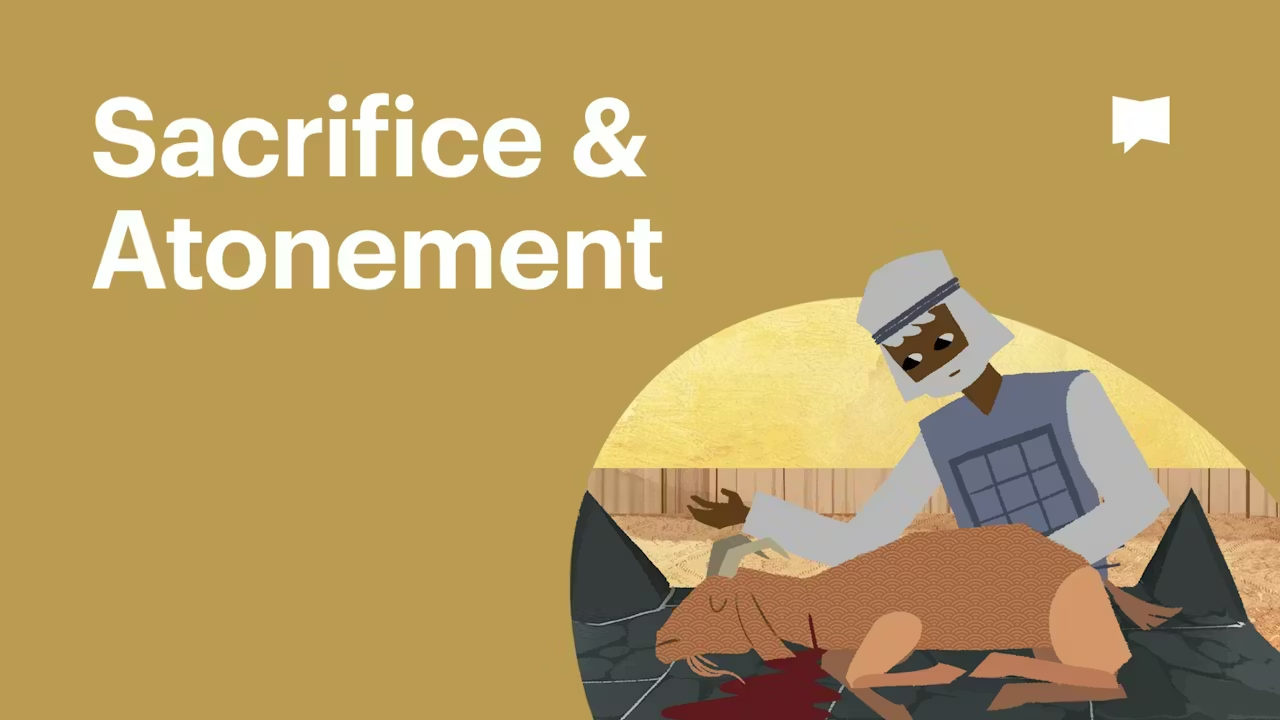
Cover image from The Bible Project’s video, Sacrifice & Atonement (alternatively titled “This Ancient Ritual Helps Explain Jesus’ Death”)
There are two reasons for this review. First, the Bible Project’s content is widely used in youth groups, and second, I expect many will be using their videos in Youth Group over the next few weeks as we approach Easter. Since YPT’s emphasis is “Youth Ministry is theological ministry,” it seems appropriate that we’d offer a brief review of the Bible Project’s doctrine regarding the cross and atonement. Given the amount of content they have produced, I have done my best to give a fair representation, but I recognize it will be imperfect.
Since my goal is to give a big-picture overview and not a detailed critique, I’m not going to go point-by-point through Scripture to cross-examine every point. I hope is that this article will help youth pastors (and others who are curious) to see the strengths and weaknesses in the Bible Project’s teaching on the cross and atonement so they will proclaim the resurrection to students, with joy and faithfulness.
What the Bible Project Says About the Cross and Atonement
When we talk about “the atonement,” Christians are talking about how God has “covered over” our sin through the blood of Jesus, shed on the cross. Through the blood of Christ, we have been “reconciled” to God, meaning our debt has been paid and we are “bought back” from slavery to evil. The cross sets us free. It is the central and necessary locus where our salvation has been accomplished and secured.
Through the death and resurrection of Jesus Christ, evil has been defeated. This includes two types of evil: direct evil (murder, theft, etc.) and indirect evil (injustice, interpersonal conflict, etc.). Evil lives within us, and we all live in this broken, evil world. Jesus came to set us free because this isn’t the way He created us to live as image-bearers. He created us to bear his image and to reflect his glory. The cross makes this possible, once again. What mercy. What grace!
Here are a few quotes from select videos that capture the Bible Project’s message about the cross and atonement (all videos are linked at the bottom of this article):
When Christians say, “I've been redeemed by the blood of the lamb, what they mean is that because of Jesus’ life, they have been reclaimed by God into freedom and into a kind of life that’s beyond the power of death. We belong to God, and nothing can change that.” (How to Know You Belong to God, August 2025)
“When Jesus of Nazareth hit the public stage, he continued Isaiah’s gospel when he went around announcing the euangelion of God’s Kingdom. Jesus claimed that God was restoring his reign over his people Israel and over all nations, and he was the one bringing it all about.” (Gospel, October 2019)
“And that word ransom refers to the sacrifice of atonement, and so all over the New Testament we hear about how Jesus’ death was an atoning sacrifice for us. It covered the debt that humans owe God for contributing to all of the evil and death in His world.” (This Ancient Ritual Helps Explain Jesus’ Death, August 2015)
Evaluating the Bible Project’s Emphasis on “Christus Victor”
The Bible Project’s message about the cross and atonement flows from the Christus Victor theory of the atonement. Their emphasis is more on Christ’s victory over evil and the curse of sin rather than the more traditional Christus Victor emphasis on Christ’s victory over Satan and the demonic realm. Regardless, this can be easily traced throughout Christian history, highlighting the cross as the means of God’s victory over sin, death, and Satan. Christ was victorious, and we are “more than conquerors” through faith in him. This is biblical teaching.
It is worth mentioning the surprising absence of the word “sin” in much (but certainly not all) of the Bible Project’s content. I won’t presume to make judgments about why or why they minimize “sin”, but my hunch is that it’s a theological decision rather than a compromise to avoid offending people. This seems to fit their interpretation of sin as “evil” or “spiritual vandalism” (see the video “Sin is Not Rule Breaking” and Tim Mackie’s sermon, both linked below). This draws upon the social and corporate effects of sin, but can lead people to overlook sin as a personal offense against God. Sin is not merely wrong or sinful because of the direct and indirect evil that results, but because it is rebellion against our holy God. This component is frequently swallowed up in the Bible Project’s content about sin, atonement, and the gospel by their message about social evil and God’s victory over it.
Unfortunately, many Evangelicals, especially from the Reformed tribe, are skeptical of Christus Victor. My unresearched hunch is that this view of the cross has been co-opted and twisted by Liberation Theology and political progressives, making the cross of Christ little more than God’s fight against oppression and injustice. On the other hand, those who affirm Christus Victor often view Penal Substitutionary Atonement as evidence of those who see God as one who rejoices in pouring out wrath on sinners. Both critiques are probably fair, in too many cases, but are unnecessary. Let’s guard against rejecting faithful teachings because of the ways they can be twisted.
What’s Missing: Penal Substitutionary Atonement
Christus Victor has biblical foundations, but it doesn’t tell the whole story. It joyfully and faithfully proclaims the power of God over sin and the devil and all of their evil works. While Christus Victor proclaims our salvation, it doesn’t necessarily help me understand what happened to my sin. That’s where Penal Substitutionary Atonement comes into play.
This view helps us see how Christ died on the cross in my place, paid the penalty for my sin, bore God’s wrath for me, so that I could be declared righteous before God. It can be simply broken down by it’s three words: Penal (having to do with legal declarations of sin and righteousness) Substitutionary (Christ, as fully-God and fully-man, died in our place) Atonement (he took our punishment, so that we would receive his holiness and life). This is the primary interpretation for Evangelicals in the Western world today. This is what we have in mind when we talk about “trusting in Jesus to forgive your sin.”
When youth pastors invite students to confess their sin, believe on Christ for the forgiveness of their sin, and to commit themselves to follow Jesus daily, then they are practicing evangelism that’s built upon Penal Substitutionary Atonement. When Christ hung on the cross and rose from the grave, he conquered sin and evil and he justified sinners. This is good news. Let’s not lose it because we’re mesmerized by a new and compelling way to explain the gospel that’s different from what we heard growing up.
Does this Mean We Should Avoid the Bible Project?
No. I don’t think we need to avoid or forsake the Bible Project. We shouldn’t assume the worst because we see their blind spot; nor should others be harsh towards us because they see ours. We can be grateful and learn from one another with humility.
In fact, I would even say that most Evangelicals who only know how to articulate the gospel from the perspective of Penal Substitutionary Atonement would be blessed to learn how to receive and proclaim the victory of Christ through the cross. Here at YPT, we often talk about the two senses of the gospel. The “Narrow Gospel” has to do with the cross and empty tomb and is the central message of our salvation from sin and new life through faith in Christ. The “Broader Gospel” has to do with salvation history and the overarching story of God’s salvation of creation from Genesis through Revelation. In many ways, Penal Substitutionary Atonement pertains to the Narrow Gospel while Christus Victor pertains to the Broader Gospel.
Again, this article isn’t an attempt to rebuke or correct the Bible Project, but an attempt to help youth pastors practice discernment. I still find most of their content really insightful and helpful. I would happily show Bible Project videos to students in my own ministry, though I would want to be clear about certain elements where I may disagree, especially where I think they overlook important doctrinal truths because of their view of sin and atonement. This is an opportunity for you and me and students to grow in discernment together.
Bible Project Videos Referenced in this Article:
Tim Mackie’s sermon “Atonement – the Language of Faith” (August 2017)
Sin is Not Rule-Breaking (March 2018)
Gospel (Oct, 2019)
How to know you belong to God (Aug 2025)
For Further Reading:
The Christus Victor theory of the Atonement. Whence the Victory? (article by Sam Storms)
What is the Meaning of Christus Victor? (article on GotQuestions)
History and Theories of Atonement (essay by Thomas J. Nettles)
The Cross of Christ (book by John Stott)
Atonement, Law, and Justice: The Cross in Historical and Cultural Contexts (book by Adonis Vidu)
(Note: This article includes Amazon Affiliate links above, which bring a small financial benefit to YPT. We use these credits primarily for books, which then fuel the content you enjoy.)
